4-Hour Fridge Rule, Solar Inverters & Bushfires: Surviving Heatwave Power Outages in Australia
Why rooftop solar switches off during street blackouts under AS/NZS 4777, keeping food safe past 4 hours, Total Fire Ban REFCL trips, and medical life-support NMI registration.
Three overlapping hazards punish Australian electrical networks every summer: scorching afternoon heatwaves pushing air-conditioning loads to record highs across the NEM and WA SWIS, severe convective squalls tearing gum branches into 22kV street lines, and Total Fire Ban days when distributors dial feeder protection settings to hair-trigger sensitivity. Understanding how home rooftop solar, food refrigeration and life-support meters react during a heatwave power outage prevents expensive food spoilage, avoids inverter confusion and keeps households safe until crews restore supply.
Why Your Rooftop Solar Turns Off in Blazing Sunshine
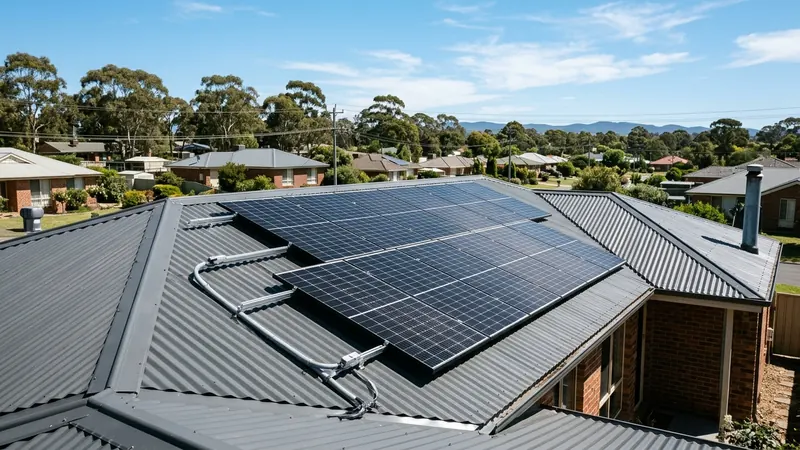
Across Australia, over 3.7 million properties now carry rooftop solar PV—yet every summer, thousands of homeowners stare in disbelief at dark kitchen downlights at 1 PM under cloudless blue skies. That automatic shutdown is not an inverter defect. Under mandatory Australian Standard AS/NZS 4777.2, grid-connected solar inverters run fast anti-islanding protection.
The instant street voltage collapses during a blackout, the inverter disconnects within milliseconds. Without anti-islanding, sunny rooftops would pump 240V power backward up into local street transformers, fatally electrocuting line crews repairing overhead lines. Homeowners also occasionally confuse an area blackout with afternoon inverter voltage tripping: across sunny South Australian and WA suburbs at midday, heavy neighbourhood solar export frequently nudges street line voltage past Australia's 258V trip ceiling, pausing residential inverters briefly while ceiling lights remain completely on. Checking your inverter error log separates grid-overvoltage throttling from a real outage in seconds. Only properties fitted with a hybrid battery inverter and an isolated Emergency Power Supply (EPS) changeover gateway can disconnect safely from the street and power backed-up circuits off-grid. Check how long essential circuits survive using our Solar & Home Battery Backup Calculator.
Heatwave Load Shedding vs Storm & Bushfire REFCL Trips
Understanding why power dropped out indicates whether restoration takes 45 minutes or eight hours:
| Summer Blackout Trigger | How It Happens | Typical Restoration Window |
|---|---|---|
| Local Street Transformer Overload | Sustained 40°C+ afternoons overload older residential pole transformers | 2–6 hours (mobile generator or crew fuse swap) |
| AEMO Emergency Load Shedding | Short rotating blocks shed by AEMO if generators trip during extreme peaks | 30–90 minutes rotating per suburb |
| Total Fire Ban REFCL / Fast-Trip | High sensitivity cuts entire feeder at tiny faults to avoid bushfire sparks; manual patrol required | 4–10+ hours pending patrol clearance |
| Severe Storm / Cyclone Damage | Fallen trees snap cross-arms and poles across multiple suburbs (BOM Warnings) | 6–48+ hours depending on feeder access |
The 4-Hour Fridge Rule & Freezer Food Safety
Hot ambient kitchen air speeds bacterial growth inside unpowered fridges. Following food-safety timelines aligned with Food Standards Australia New Zealand (FSANZ) prevents food poisoning without wasting safe staples:
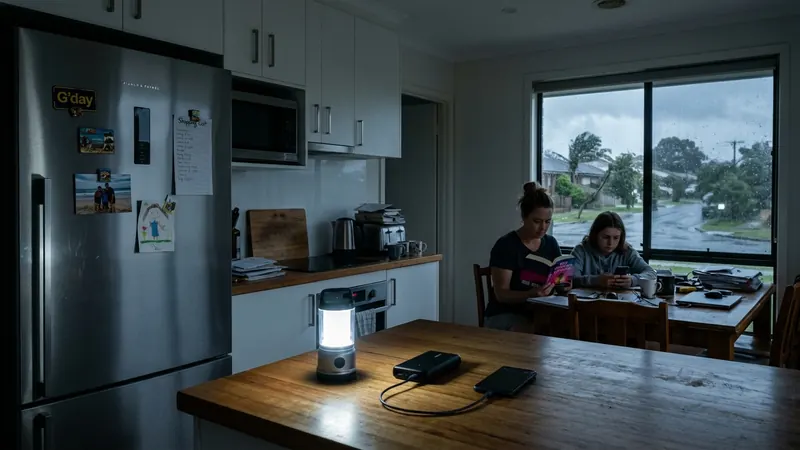
- Four-Hour Fridge Window: A domestic refrigerator whose door stays tightly shut maintains safe storage temperatures below 5°C for approximately 4 hours. Every casual door check dumps cold air onto the floor.
- 24–48 Hour Freezer Buffer: A fully packed freezer keeps contents frozen for up to 48 hours (roughly 24 hours if half-empty). Filling spare empty space with two-litre plastic water bottles ahead of forecast summer storms creates cheap cold thermal mass—and melts into chilled drinking water later.
- When in Doubt, Throw High-Risk Items Out: Any meat, poultry, seafood, cooked rice, fresh pasta, custard or soft cheese holding above 5°C for over four cumulative hours should be discarded cleanly. Hard cheeses, butter, whole uncut fruit and vinegar sauces remain safer far longer.
Medical Life-Support Registration (NMI Protection)
If anyone at your home depends on oxygen concentrators, home haemodialysis, ventilators, enteral feeding pumps or diagnosed CPAP sleep-apnoea equipment, register your property's 10- or 11-digit NMI immediately with both your electricity retailer and local DNSP under AER Life Support Rules. Registration unlocks mandatory advance notice for planned works, priority fault desk flagging and disconnection safeguards—yet crews still cannot beat downed trees faster than physics allows, so maintain charged battery backup or pre-planned cool shelter at all times.
Communications, Garage Doors & Generator Warnings
Remember three overlooked household traps during extended blackouts: cordless DECT home phones die immediately without mains power; FTTP/HFC NBN internet boxes drop out without a desktop UPS; and sectional garage doors lock shut until you pull the red manual release cord hanging from the rail carriage. Keep a battery AM/FM radio tuned to ABC Emergency, never run petrol generators inside garages (carbon monoxide kills silently indoors), and turn off split-system air conditioners at the wall so sudden voltage surges on restoration don't trip expensive compressor boards. Notice too that high-draw kitchen appliances like electric kettles (2,200W) and induction cooktops remain offline—keeping a compact camping butane stove strictly outdoors on an open verandah table makes boiling morning coffee or heating soup straightforward during two-day repairs.
Check live status on our Australia power outages page and assess GSL bill credits via the Outage Compensation Calculator. Above all, check on elderly or isolated neighbours during prolonged heatwave blackouts—moving heat-sensitive residents early to an air-conditioned local shopping centre or council cooling hub before indoor temperatures climb past 34°C often prevents emergency heat-stress hospitalisations.
Frequently Asked Questions
Why didn't my rooftop solar keep my fridge running during a daytime blackout?
Standard grid-tied inverters legally disconnect under AS/NZS 4777 anti-islanding rules when street power drops; you need a compatible hybrid battery system wired with an EPS backup circuit for off-grid daytime power.
Can I claim spoiled food compensation after a heatwave outage?
Routine storm blackouts rarely trigger distributor spoilage payouts unless negligence or an extended fault occurred, though home-contents insurance policies frequently include dedicated spoiled-food cover—often with reduced or zero excess depending on policy wording.
How do I check which electricity distributor handles Total Fire Ban shutoffs in my suburb?
Enter your 4-digit postcode on our Who Is My Distributor tool to identify Ausgrid, Endeavour, Essential, CitiPower, Powercor, AusNet, Energex, SA Power Networks or Western Power directly.